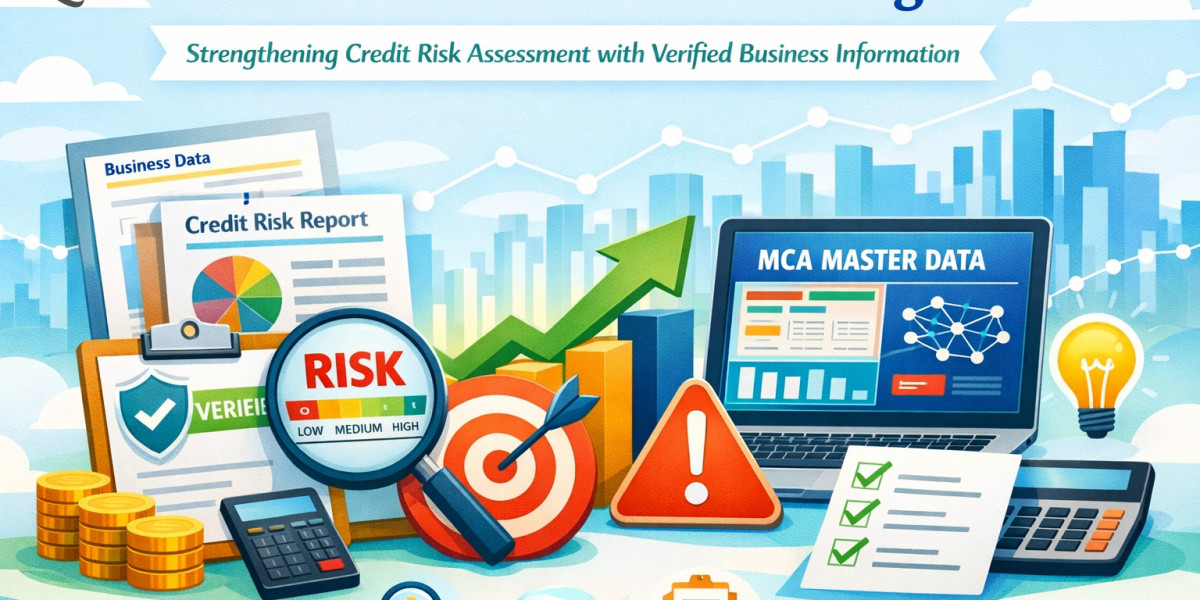

From Raw Data to Risk Intelligence
India's Ministry of Corporate Affairs maintains one of the largest and most comprehensive corporate databases in Asia — a repository of registration, compliance, directorship, and financial filing information covering millions of companies. Yet for most businesses making credit decisions, this data remains largely untapped. The gap between what MCA Master Data contains and how effectively it is used in credit risk assessment represents one of the most significant unexploited opportunities in Indian commercial finance.
The journey from MCA data to decision-making is not automatic. Raw registry data requires interpretation, contextualisation, and integration with other information sources before it becomes the risk intelligence that drives better credit outcomes. Understanding how to make this journey — how to extract actionable insight from the structured but complex data that MCA records contain — is the essential skill that separates businesses that use MCA data effectively from those that treat it as an administrative reference rather than a strategic risk tool.
The Credit-Relevant Dimensions of MCA Master Data
MCA Master Data contains several categories of information that are directly relevant to credit risk assessment, each of which illuminates a different dimension of the risk profile of a credit applicant.
Corporate identity and status information establishes the most fundamental facts: the company's legal name, its CIN, date of incorporation, registered office, authorised and paid-up capital, and — most critically — its current active status. Confirming that the entity requesting credit is a currently active, properly registered company is the non-negotiable first step in any credit assessment. A company that has been struck off or is under liquidation cannot be a legitimate credit counterparty, and MCA status verification catches this before any exposure is accepted.
Filing compliance history reveals how consistently the company meets its statutory obligations. Annual returns, financial statement filings, and event-based disclosures are all required under the Companies Act, and the MCA database records whether these obligations have been met on time, filed late, or missed entirely. A company with a consistent history of timely filings demonstrates an organised, financially functional management team. A company with multiple missed or late filings is signalling administrative dysfunction that frequently correlates with broader financial and operational difficulties.
Authorised and paid-up capital information provides a structural indicator of the financial substance behind the company. A significant gap between authorised capital and paid-up capital — suggesting that shareholders have not committed the capital they were authorised to raise — can indicate a company in early and uncertain stages of development, or one whose shareholder commitment to the enterprise is limited. While not conclusive in isolation, this indicator contributes meaningfully to the overall risk picture.
Director Data: The Deepest Credit Risk Signal in MCA Records
Of all the information available in MCA Master Data, director data offers the deepest and most nuanced credit risk signals. Every director registered with the MCA is linked to their complete history of company associations — past and present, active and struck off. This linkage enables credit assessors to build a picture of the individuals behind a credit applicant that goes far beyond their association with the specific company under review.
A director who has previously been associated with multiple companies that were subsequently struck off, wound up, or faced regulatory action is carrying a track record that is material to any credit assessment involving a company they currently direct. This is not about prejudging individuals unfairly — it is about incorporating available evidence into risk assessment in the same way that a payment history or litigation record is incorporated. The MCA database makes this evidence accessible; the credit assessor's job is to use it.
Director disqualification records are particularly significant. Under the Companies Act, directors can be disqualified for a range of compliance failures. A director who is currently disqualified — or has a history of disqualification — is a material risk indicator that should trigger enhanced scrutiny of any credit application involving their current companies. This information is available in MCA records but is routinely overlooked by credit assessors who focus exclusively on the financial statements of the applicant company.
Integrating MCA Data with Business Information Reports
MCA Master Data is most powerful when integrated with the complementary information available in a comprehensive Business Information Report. While MCA data addresses the structural, legal, and compliance dimensions of credit risk, a Business Information Report adds the financial performance analysis, payment behaviour data, and litigation intelligence that MCA records do not contain. Together, these two sources provide a complete, multi-dimensional view of the credit applicant that supports significantly more accurate risk assessment than either source alone.
The integration is not merely additive — it is synergistic. MCA-identified concerns about director history or filing compliance prompt more intensive review of the financial data in the Business Information Report. Payment behaviour patterns identified in the Business Information Report contextualise the financial ratios derived from MCA-filed accounts. Each source enriches the interpretation of the other, producing a risk assessment that is more than the sum of its parts.
Building a Repeatable MCA-Informed Credit Process
The most effective way to capture the value of MCA Master Data in credit risk assessment is to embed it in a repeatable, documented process rather than treating it as an ad hoc research exercise. This means defining which MCA checks are conducted for every new credit application, what findings from those checks trigger enhanced review, and how MCA-derived information is documented and incorporated into the formal credit decision record.
A repeatable process creates consistency, auditability, and institutional learning. When an MCA-identified risk factor — a director with a history of struck-off companies, a compliance gap in the filing record — is documented as part of a credit decision, it becomes part of the organisation's risk intelligence, available to inform future decisions involving the same individuals or entities.
Conclusion
MCA Master Data is one of India's most accessible and underutilised credit risk resources. The journey from raw MCA data to actionable credit risk intelligence requires structured interpretation, integration with Business Information Reports, and embedding in a repeatable assessment process — but the investment is modest relative to the improvement in credit decision quality it delivers. Businesses that make this journey consistently make better credit decisions, identify risks that their competitors miss, and build credit portfolios that perform more predictably and profitably over time.