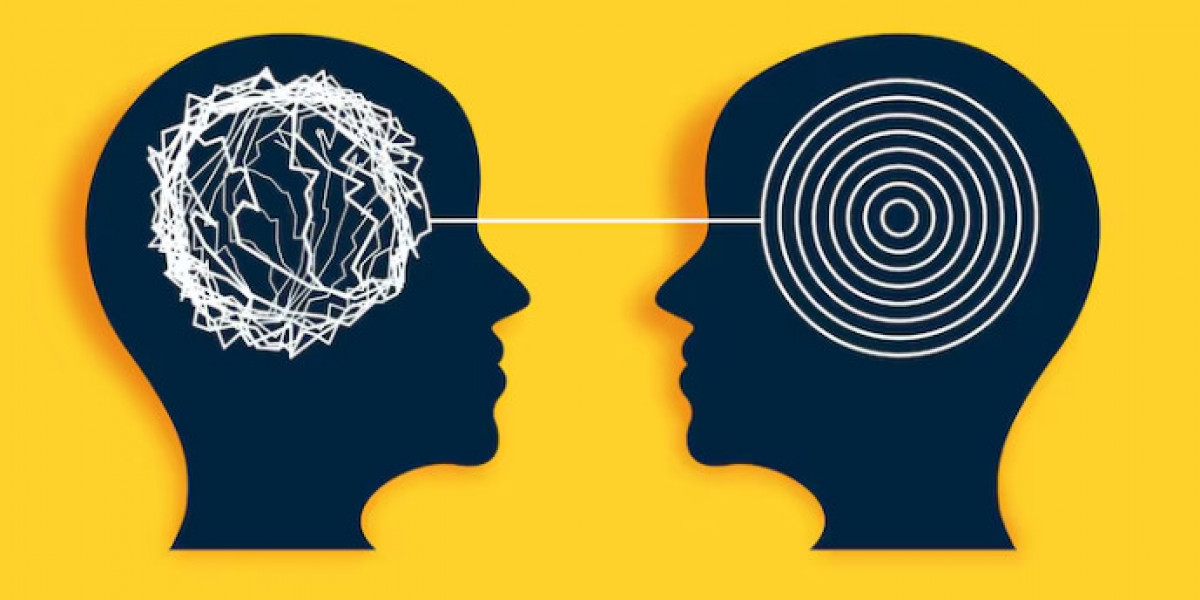

The discussion of materialism vs consciousness is one of the most enduring and profound debates in philosophy, psychology, and science. At its core, this debate asks a fundamental question: Is everything that exists ultimately physical, or is consciousness something more than matter? The tension between these two perspectives shapes how we understand reality, identity, free will, and even the meaning of life.
To explore materialism vs consciousness, we must define both concepts clearly and examine how they interact, conflict, and potentially complement each other.
What Is Materialism?
Materialism is the philosophical view that everything that exists is physical in nature. According to this perspective, the universe consists entirely of matter and energy, governed by physical laws. Thoughts, emotions, memories, and awareness are not separate from the physical world but are products of physical processes—specifically, processes in the brain.
From a materialist standpoint, consciousness is not a mysterious or independent force. Instead, it is the result of complex neural activity. When neurons fire in particular patterns, subjective experiences arise. Just as digestion results from biological processes in the stomach, awareness results from biological processes in the brain.
Materialism has strong ties to modern science. Advances in neuroscience show clear correlations between brain activity and mental states. Damage to specific areas of the brain can alter personality, memory, and perception. These findings support the materialist claim that consciousness depends on physical structures.
However, materialism does not merely assert dependence—it typically claims identity. In other words, consciousness is not just caused by the brain; it is the brain functioning in certain ways.
What Is Consciousness?
Consciousness refers to subjective experience—the “what it is like” aspect of being aware. It includes sensations, thoughts, emotions, perceptions, and self-awareness. When you feel pain, see a sunset, or reflect on your own thinking, you are experiencing consciousness.
Unlike physical objects, consciousness has an inner, qualitative dimension. This is sometimes called “qualia,” the individual instances of subjective experience. For example, the redness of red or the taste of chocolate cannot be fully described in physical terms alone.
The difficulty in explaining how physical matter produces subjective experience is known as the “hard problem” of consciousness. While science can describe brain activity, explaining why those processes are accompanied by experience remains challenging.
This is where the debate of materialism vs consciousness becomes especially intense. If consciousness cannot be reduced to physical processes, does that mean materialism is incomplete?
The Argument for Materialism
Supporters of materialism argue that every known mental event corresponds to a physical event in the brain. Brain scans show measurable patterns during thinking, dreaming, or feeling emotions. Chemical changes affect mood. Electrical stimulation can create vivid experiences.
From this evidence, materialists conclude that consciousness emerges from physical complexity. The brain, composed of billions of neurons, generates awareness in the same way that complex arrangements of matter generate other emergent properties, such as life or weather patterns.
Another argument for materialism is its explanatory power. By grounding consciousness in physical processes, it avoids invoking non-physical substances or forces. It remains consistent with the scientific method, which relies on measurable, observable phenomena.
In the debate over materialism vs consciousness, materialists often emphasize simplicity. If physical explanations suffice, there is no need to propose additional metaphysical entities.
The Challenge to Materialism
Critics argue that materialism cannot fully account for subjective experience. Even if we map every neural firing in the brain, we may still not understand why those firings are accompanied by awareness.
For example, imagine a machine that perfectly simulates brain activity. Would it necessarily be conscious? Or would it simply process information without inner experience? This question challenges the assumption that physical duplication guarantees consciousness.
Some philosophers propose that consciousness is fundamental, not derivative. Rather than emerging from matter, consciousness might be a basic feature of reality, similar to space, time, or energy.
Others support dualism, the idea that mind and matter are distinct substances. In dualism, consciousness cannot be reduced to physical processes because it belongs to a different category of existence.
These alternatives highlight the difficulty of reducing inner experience to outer observation. The debate over materialism vs consciousness persists because neither side has conclusively resolved this tension.
Emergence and Middle Positions
Between strict materialism and full dualism, there are intermediate views. One influential idea is emergentism. According to this view, consciousness arises from physical systems but cannot be entirely explained by examining individual components.
For example, individual water molecules are not “wet,” but when combined in sufficient numbers, wetness emerges. Similarly, individual neurons are not conscious, but together they produce awareness.
Emergentism attempts to reconcile materialism with the unique features of consciousness. It maintains that consciousness depends on matter while acknowledging that it possesses properties not reducible to simple physical descriptions.
Another perspective suggests that consciousness may be a fundamental property present in all matter to some degree. In this view, complex organisms like humans exhibit highly developed consciousness, while simpler systems possess more basic forms.
These middle-ground approaches aim to soften the conflict between materialism and consciousness by reframing their relationship.
Implications for Identity and Free Will
The debate over materialism vs consciousness has profound implications for personal identity and free will. If materialism is correct, then our thoughts and decisions are ultimately the result of physical processes governed by natural laws. This raises questions about whether we truly have free will or whether our choices are determined by prior causes.
On the other hand, if consciousness is not fully reducible to matter, it may allow for greater autonomy. A non-material aspect of mind could, in theory, transcend strict physical determinism.
Similarly, personal identity depends on how we understand consciousness. If the self is nothing more than brain activity, then changes to the brain alter the self. But if consciousness has an independent dimension, identity might persist beyond physical change.
These issues demonstrate that the debate is not merely abstract. It shapes how we see ourselves and our place in the universe.
Scientific and Philosophical Collaboration
Modern research increasingly combines neuroscience, psychology, and philosophy to address materialism vs consciousness. Brain imaging technologies continue to reveal detailed patterns associated with perception and emotion. Meanwhile, philosophers refine conceptual frameworks to clarify what counts as explanation.
Artificial intelligence also adds new complexity. If machines one day demonstrate behaviors indistinguishable from human awareness, we must confront whether consciousness can be engineered—or whether it remains uniquely biological.
The ongoing dialogue between science and philosophy suggests that understanding consciousness may require both empirical investigation and careful reflection on the limits of physical explanation.
Conclusion
The debate over materialism vs consciousness remains unresolved because it touches the deepest aspects of existence. Materialism offers a coherent, scientifically grounded framework that explains mental phenomena in terms of physical processes. Consciousness, however, presents a persistent mystery, challenging us to account for subjective experience within—or beyond—that framework.
Whether consciousness is a byproduct of matter, an emergent property, or a fundamental feature of reality, the question invites continual exploration. As science advances and philosophical inquiry deepens, our understanding of materialism vs consciousness may evolve. Until then, the dialogue between matter and mind continues to shape one of humanity’s most profound intellectual journeys.