
Unplanned engine breakdowns disrupt production schedules, delay shipments, and increase maintenance costs. In industrial machinery and automotive manufacturing, even a minor synchronization failure can lead to severe engine damage. For OEMs and fleet operators, this risk directly impacts reliability metrics and customer trust.
Poor-quality belt systems often stretch, crack, or lose tension over time. This causes improper valve timing, reduced fuel efficiency, overheating, and in worst cases, catastrophic piston-to-valve contact. Traditional replacement methods using separate components increase installation errors and downtime.
Manufacturers today need dependable, pre-engineered solutions that minimize failure risks. That’s where integrated timing belt kits become critical in maintaining long-term engine performance and operational safety.
What Are Timing Belt Kits?
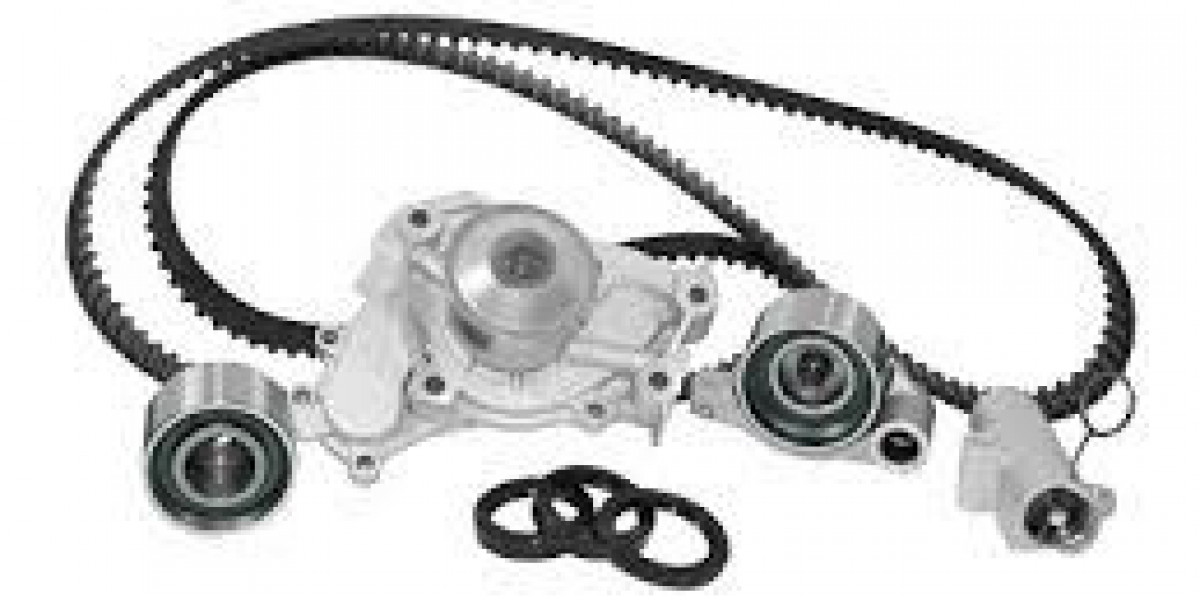
Timing belt kits are complete engine synchronization packages that include:
Timing belt
Tensioner
Idler pulleys
Sometimes water pump
Necessary mounting hardware
Unlike purchasing components individually, complete timing belt kits ensure compatibility between parts. This reduces alignment issues and improves installation efficiency.
In internal combustion engines, the timing belt synchronizes the crankshaft and camshaft rotation. This ensures valves open and close at the correct time during each cylinder cycle. Without precise synchronization, engine performance drops and mechanical damage becomes likely.
How Timing Belt Kits Work
The timing belt connects the crankshaft to one or more camshafts. As the crankshaft rotates, the belt drives the camshaft at a precise ratio.
Role of Tensioners
Tensioners maintain optimal belt tension. Proper tension prevents:
Slipping
Premature wear
Misalignment
Noise and vibration
Role of Idler Pulleys
Idler pulleys guide the belt along its path. They reduce friction and ensure smooth operation under varying engine loads.
By integrating matched components, timing belt kits maintain stable engine timing across thousands of operating hours.
Problems with Traditional Replacement Methods
Many workshops previously replaced only the belt. This approach creates hidden risks:
Old tensioners fail shortly after belt replacement
Misaligned pulleys increase wear
Inconsistent component quality
Repeated labor costs
Partial replacements may reduce short-term cost but increase long-term failure probability. For B2B buyers, this means higher warranty claims and reputational damage.
Complete timing belt kits eliminate compatibility uncertainty and extend maintenance intervals.
Key Features Manufacturers Should Look For
When sourcing timing belt kits for OEM or aftermarket supply, consider these technical features:
High tensile strength belt material
Heat and oil resistance
Precision-machined pulleys
Pre-calibrated tensioners
Corrosion-resistant components
Strict dimensional tolerances
Advanced kits use reinforced rubber compounds and fiberglass or aramid cord structures. These materials resist elongation and maintain synchronization accuracy under thermal stress.
Comparison: Individual Parts vs Complete Kits
| Feature | Individual Components | Complete Timing Belt Kits |
|---|---|---|
| Compatibility | May vary | Engine-matched |
| Installation Time | Higher | Reduced |
| Failure Risk | Moderate to High | Lower |
| Maintenance Cost | Repetitive | Optimized |
| Warranty Support | Limited | Better coverage |
For fleet managers and OEMs, complete kits provide predictable lifecycle performance and lower total cost of ownership.
Real-World Applications
Timing belt kits are widely used in:
Passenger vehicles
Commercial fleets
Industrial engines
Agricultural machinery
Light-duty trucks
In high-volume manufacturing, standardized kits simplify procurement and inventory control. Engineers prefer bundled solutions because they reduce design variability and improve assembly consistency.
Why Manufacturers Prefer Complete Kits
B2B buyers and automotive manufacturers prioritize reliability and scalability. Complete kits:
Reduce installation errors
Improve service intervals
Simplify supplier management
Support bulk procurement
Lower warranty risks
From a production standpoint, using standardized kits enhances quality control and ensures every engine meets performance benchmarks.
How to Choose the Right Timing Belt Kit
Selecting the correct kit requires technical evaluation. Consider:
Engine Specifications
Confirm engine model, displacement, and production year.
Operating Conditions
High-temperature or heavy-duty environments require reinforced belt materials.
Supplier Quality Standards
Choose manufacturers with:
ISO-certified production
Material traceability
Strict inspection processes
Proven OEM supply history
Lifecycle Cost Analysis
Do not focus only on unit price. Evaluate durability, warranty terms, and replacement intervals.
A carefully selected kit improves engine longevity and reduces lifecycle operating costs.
Conclusion
Engine timing accuracy is critical for mechanical safety, fuel efficiency, and long-term durability. Partial replacements increase risk and downtime, especially in commercial and industrial applications.
Complete timing belt kits provide a reliable, cost-effective solution by integrating matched components designed for synchronized performance. For manufacturers, fleet operators, and B2B distributors, investing in high-quality kits ensures operational stability, lower maintenance expenses, and stronger customer confidence.
Choosing the right supplier and specification is not just a maintenance decision — it is a strategic reliability investment.