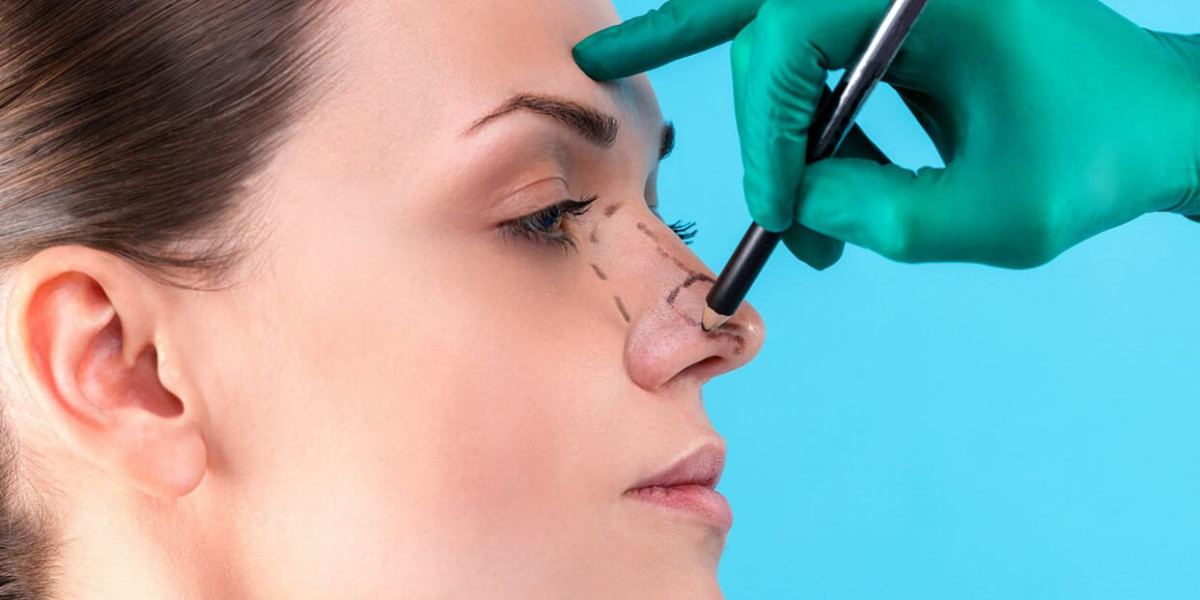

Rhinoplasty, commonly referred to as a nose job, is a widely sought-after procedure in Riyadh, performed to improve the aesthetic appearance of the nose, correct functional issues, or address trauma-related deformities. One of the most important decisions patients and surgeons must make before undergoing rhinoplasty is choosing between open and closed surgical techniques. Each approach has unique advantages, limitations, and suitability depending on the complexity of the procedure, patient anatomy, and desired outcomes. Understanding the differences between open and closed rhinoplasty is essential for individuals in Riyadh to make informed decisions and achieve optimal results. Rhinoplasty in Riyadh has become increasingly popular among individuals seeking both aesthetic enhancement and functional improvements for their noses.
Open rhinoplasty is characterized by a small external incision made on the columella, the tissue strip separating the nostrils. This incision allows the surgeon to lift the nasal skin and gain direct visibility of the underlying cartilage and bone structures. The increased exposure provided by open rhinoplasty makes it particularly suitable for complex cases, such as significant nasal reshaping, revision surgery, or correcting congenital or post-traumatic deformities. Surgeons in Riyadh often recommend open rhinoplasty when precise manipulation of the nasal tip, alignment of cartilage, or grafting is required. The enhanced visualization allows for meticulous adjustments to achieve symmetry, proportion, and structural support.
One of the key advantages of open rhinoplasty is precision and control. By providing a clear view of the nasal framework, surgeons can perform delicate refinements that may not be possible with limited internal access. This is particularly important for patients with thick nasal skin, severe asymmetry, or structural issues that require extensive cartilage grafting. Open rhinoplasty also allows surgeons to address both cosmetic and functional concerns simultaneously, ensuring that the nose not only looks balanced but also functions properly. The main drawback is the small visible scar on the columella; however, with careful technique and proper healing, this scar is usually minimal and barely noticeable.
In contrast, closed rhinoplasty, also known as endonasal rhinoplasty, involves making all incisions inside the nostrils, leaving no external scars. This technique is typically preferred for patients with minor nasal concerns, such as subtle tip refinement, modest bridge reduction, or minor nostril reshaping. Closed rhinoplasty is less invasive than open rhinoplasty, which often results in a shorter recovery period and reduced post-operative swelling and bruising. Patients in Riyadh seeking subtle, conservative changes may benefit from the closed approach due to its minimal disruption of nasal tissues.
Despite its advantages, closed rhinoplasty has some limitations. Because the surgeon works without direct visualization of the nasal framework, it is more challenging to perform complex tip work, grafting, or significant structural modifications. Closed rhinoplasty relies heavily on the surgeon’s experience, tactile skill, and understanding of nasal anatomy. For patients requiring major revisions or intricate reshaping, closed rhinoplasty may not provide sufficient access to achieve optimal outcomes. However, when used for suitable cases, it offers excellent results with minimal scarring and faster recovery.
Patient selection plays a critical role in determining the appropriate technique. Individuals in Riyadh with thick nasal skin, severe asymmetry, pronounced dorsal humps, or prior rhinoplasty often benefit from the open approach due to the precision it allows. On the other hand, patients seeking subtle refinements or minor cosmetic adjustments may achieve excellent results with closed rhinoplasty. Surgeons carefully evaluate facial proportions, skin type, cartilage strength, and functional considerations during preoperative consultations to recommend the most suitable technique for each patient.
Recovery and post-operative care also differ slightly between the two techniques. Open rhinoplasty typically involves slightly more swelling and bruising due to the external incision and tissue manipulation. Patients may need more time before resuming social activities, though the functional recovery timeline is similar for both methods. Closed rhinoplasty generally results in quicker initial recovery, allowing patients to return to work or daily activities sooner. Regardless of technique, adherence to post-operative instructions, including avoiding trauma, managing swelling, and attending follow-up appointments, is essential for achieving the best results.
Surgeon expertise is another determining factor. Both open and closed rhinoplasty require extensive training, but closed rhinoplasty is particularly demanding due to the limited visibility during surgery. Patients in Riyadh should choose a surgeon with experience in the chosen technique and a proven record of achieving natural, balanced results. Clear communication about goals, expectations, and potential outcomes is vital to ensure satisfaction with the final appearance.
In conclusion, understanding open versus closed rhinoplasty is essential for patients in Riyadh seeking nose reshaping surgery. Open rhinoplasty offers superior visibility, precision, and suitability for complex cases, while closed rhinoplasty provides a less invasive option for minor adjustments with faster recovery and no external scarring. The choice between techniques depends on the complexity of the procedure, patient anatomy, aesthetic goals, and surgeon expertise. By carefully evaluating these factors and consulting with an experienced surgeon, patients can achieve safe, natural-looking results that enhance both appearance and function, ensuring a successful rhinoplasty experience.