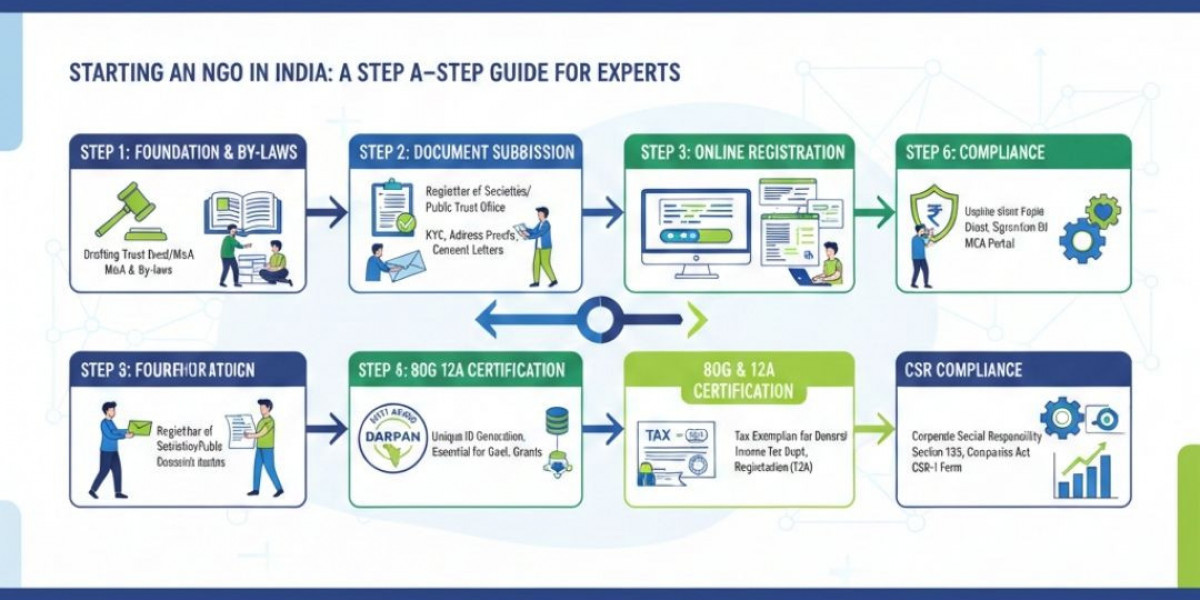

Understanding the Process to Register NGO
The process to register NGO starts with deciding the type of organization you want to form. Usually, there are three options:
- Trust – governed by the Indian Trusts Act.
- Society – governed by the Societies Registration Act, 1860.
- Section 8 Company – governed by the Companies Act, ideal for non-profit work.
Once the type is chosen, the next step is preparing the required documents. This includes a detailed memorandum of association, proof of office, and details of trustees or members.
I always emphasize clarity in these documents. A well-prepared application can save months of back-and-forth with authorities.
Importance of Darpan Registration
After your NGO is registered, the next step I recommend is Darpan registration. This registration is essential for receiving government grants and for transparency in NGO operations.
Darpan registration links your NGO to the NGO Darpan portal, making it easier for ministries and government bodies to verify your organization. The registration process is straightforward:
- Create an account on the NGO Darpan portal.
- Provide your NGO registration details.
- Upload necessary documents like PAN, registration certificate, and trustee details.
- Submit for verification.
With Darpan registration, NGOs gain credibility and access to government schemes. I always guide clients to complete this step as soon as their NGO registration is finalized.
FCRA Registration for Foreign Funding
Many NGOs aim to receive funds from abroad. In such cases, FCRA Registration is mandatory. The Foreign Contribution (Regulation) Act ensures that foreign donations are regulated.
The steps I follow for FCRA registration include:
- Confirm your NGO has been registered for at least three years.
- Ensure your NGO has a clear track record of activities.
- Apply online through the Ministry of Home Affairs portal.
- Submit supporting documents, including financial statements.
FCRA registration allows NGOs to legally receive foreign funds. I always advise organizations to maintain transparency and proper record-keeping to comply with FCRA rules.
Tips for a Smooth Process
Through my experience, I have found that some common mistakes delay the process to register NGO. Here are a few tips:
- Always double-check your documents before submission.
- Maintain clear communication with authorities.
- Keep digital copies of all certificates and applications.
- Plan ahead for Darpan registration and FCRA registration.
These simple measures can save time and ensure your NGO starts operating smoothly.
Why I Recommend NGO Experts ?
At NGO Experts, I personally assist clients at every stage. From preparing documents to guiding you through Darpan registration and FCRA registration, I ensure no step is missed. My goal is to make the legal process simple, fast, and reliable.
Starting an NGO is more than paperwork. It’s about creating impact. Following a clear process to register NGO, completing Darpan registration, and obtaining FCRA registration can give your NGO the foundation it needs to serve the community effectively.