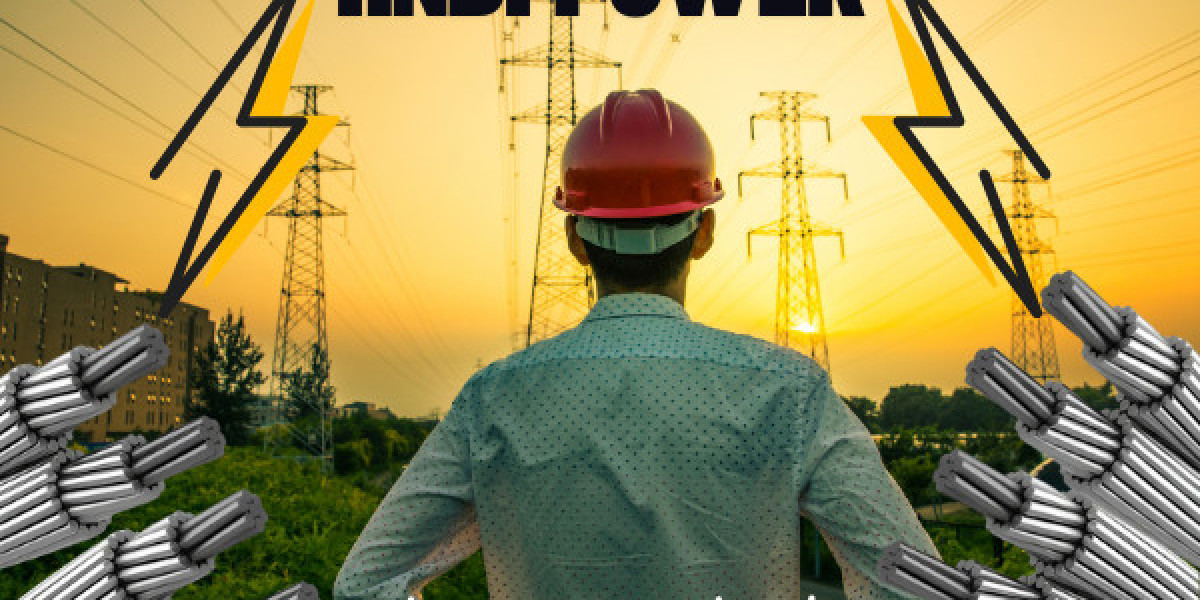

A bare conductor is a fundamental component in overhead power transmission and distribution networks. Unlike insulated cables, bare conductors rely on air as the primary insulation medium, making them highly efficient, cost-effective, and suitable for long-span applications. For power utilities, EPC contractors, and procurement teams, selecting the right bare conductor directly impacts line reliability, mechanical strength, electrical efficiency, and lifecycle cost.
HNBF Power, as a global manufacturer of overhead conductors and power cables, supplies engineered bare conductor solutions designed to meet international utility standards and demanding field conditions.
Types of Bare Conductors Used in Overhead Lines
Bare conductors are manufactured in multiple configurations to suit different voltage levels, terrains, and load requirements.
AAC (All Aluminum Conductor)
AAC bare conductors offer excellent conductivity and corrosion resistance. They are commonly used in urban distribution networks and coastal regions where corrosion protection is critical.
AAAC (All Aluminum Alloy Conductor)
AAAC bare conductor provides higher tensile strength than AAC while maintaining good conductivity. It is ideal for medium- to long-span overhead lines where improved mechanical performance is required.
ACSR (Aluminum Conductor Steel Reinforced)
ACSR bare conductor combines aluminum strands with a steel core, delivering superior strength for long-distance transmission lines, river crossings, and high-tension applications.
Key Technical Advantages of Bare Conductors
Bare conductors remain the preferred choice for overhead systems due to several engineering benefits:
High current-carrying capacity with efficient heat dissipation
Lower material cost compared to insulated power cables
Ease of installation and maintenance in transmission corridors
Long service life when manufactured to utility-grade standards
HNBF Power manufactures bare conductors with precise stranding, controlled aluminum purity, and optimized steel core ratios to ensure consistent electrical and mechanical performance.
Standards and Quality Requirements
For procurement buyers and utility engineers, compliance with recognized standards is non-negotiable. High-quality bare conductors should conform to IEC, ASTM, BS, or equivalent national standards. Critical parameters include:
Electrical resistance and conductivity
Tensile strength and elongation
Stranding accuracy and surface finish
Dimensional tolerances and weight per kilometer
HNBF Power follows strict quality control procedures, including raw material inspection, in-process testing, and final product verification to meet global transmission and distribution requirements.
Application Areas for Bare Conductors
Bare conductors are widely deployed across utility and infrastructure projects, including:
High-voltage and extra-high-voltage transmission lines
Medium-voltage overhead distribution networks
Rural electrification projects
Substation jumpers and grounding systems
Their adaptability makes bare conductors a strategic choice for grid expansion, rehabilitation, and capacity upgrades.
Procurement Considerations for Utilities and EPC Projects
When sourcing bare conductors, procurement teams should evaluate more than just price. Key decision factors include:
Manufacturer’s production capacity and delivery reliability
Custom conductor sizing and stranding options
Technical support and documentation availability
Proven experience in utility-scale projects
HNBF Power works closely with engineers and buyers to deliver customized bare conductor solutions aligned with project specifications and installation conditions.
FAQs About Bare Conductors
Q1: What is the main difference between AAC, AAAC, and ACSR bare conductors?
AAC focuses on conductivity, AAAC offers improved strength, and ACSR provides the highest tensile strength for long-span transmission lines.
Q2: Are bare conductors suitable for harsh environments?
Yes, when properly selected. AAAC and ACSR bare conductors perform well in high wind, high temperature, and long-span conditions.
Q3: How do utilities ensure safety with bare conductors?
Safety is achieved through proper clearance design, tower height, and adherence to transmission standards rather than insulation.
Q4: Can bare conductors be customized for specific projects?
Yes. Strand configuration, conductor diameter, and material composition can be tailored to project requirements.
Partner with HNBF Power for Reliable Bare Conductor Supply
Choosing the right bare conductor is critical for building durable and efficient power networks. HNBF Power combines manufacturing expertise, global supply capability, and utility-focused engineering support to deliver dependable overhead conductor solutions.
Contact HNBF Power today to discuss your bare conductor requirements and receive customized solutions for your transmission and distribution projects.