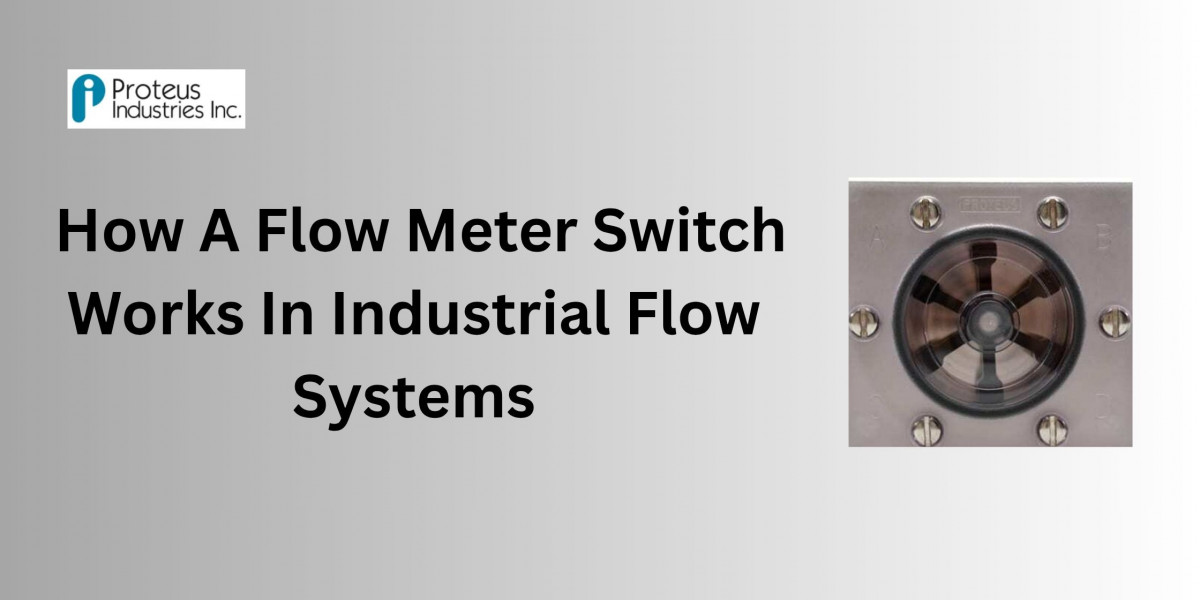

In large industrial operations, accurate fluid flow monitoring is essential. Whether it's in chemical processing, food production, or water treatment plants, keeping track of flow rates helps maintain safety, efficiency, and consistency. One important tool that supports this is the flow meter switch—a compact, reliable device that responds to the movement of fluids through a system.
If you're looking to understand how a flow meter switch works and why it's critical in industrial flow systems, this guide breaks it down naturally.
What Is a Flow Meter Switch?
A flow meter switch is a device that detects whether fluid is moving through a pipe or channel and reacts when it hits a certain flow rate. It's not just measuring flow—it's monitoring and activating a response based on the amount of fluid flowing.
For example, if fluid flow slows down too much or stops completely, the switch sends a signal. This might alert a monitoring system or trigger a process adjustment to avoid equipment damage, contamination, or overheating.
How Does It Work?
The working principle depends on the type of flow meter switch, but the overall process is straightforward:
- Sensing: The device detects the movement of fluid (liquid or gas) in a pipeline.
- Threshold Monitoring: A preset flow value is programmed into the switch.
- Response: When the flow crosses the set point—either going too low or too high—the switch is activated.
- Signal Output: The device sends a signal to other equipment, such as alarms, controllers, or shut-off valves.
Some flow switches are mechanical and use a paddle that moves with the flow. Others use sensors to detect heat transfer, vibration, or sound waves in the fluid. Regardless of type, their job is to monitor flow and help control the process in real time.
Types of Flow Meter Switches
There are several kinds of flow meter switches, each with its advantages depending on the environment:
- Paddle Type (Mechanical): Uses a paddle inserted into the flow path. Movement of the paddle activates the switch.
- Thermal Flow Switch: Uses temperature sensors to detect changes in heat transfer caused by flowing fluid.
- Ultrasonic Flow Switch: Uses sound waves to measure flow velocity and detect the absence or presence of flow.
- Magnetic Flow Switch: Detects changes in magnetic fields caused by fluid movement, useful for conductive liquids.
Where Are Flow Meter Switches Used?
Flow switches are used in various industrial systems, including:
- Water filtration and treatment: Ensures correct flow rates in filtration lines.
- Chemical processing: Monitors flow of raw materials and chemicals to prevent overflow or underflow.
- Manufacturing lines: Controls flow for cooling systems, lubrication systems, and ingredient mixing.
- HVAC and refrigeration units: Maintains system stability by regulating liquid or gas flow.
These systems rely on consistent and safe fluid handling, making the flow meter switch a valuable part of the operation.
Key Benefits of Using a Flow Meter Switch
- Real-time Protection: Instantly detects abnormal flow conditions to prevent equipment damage.
- Improved Efficiency: Ensures correct flow rates for optimal performance.
- Automation Support: Triggers system actions without human input.
- Process Consistency: Maintains flow at expected levels for product quality and process control.
- Low Maintenance: Many switches require minimal servicing when properly installed.
Installation and Maintenance Tips
- Proper Placement: Install the switch in a section of pipe with stable flow and minimal turbulence.
- Sizing: Match the flow meter switch to the pipe size and expected flow range.
- Calibration: Set the flow threshold according to system requirements.
- Maintenance: Inspect regularly for scale, blockages, or sensor wear. Clean as needed to maintain accuracy.
Final Thoughts
A flow meter switch may seem like a small component, but it plays a big role in industrial systems. From protecting equipment to ensuring consistent production, it helps keep operations running smoothly and safely.
Understanding how it works and choosing the right type for your application can make a meaningful difference in system performance. Whether you're designing a new setup or improving an existing one, flow meter switches are a smart, practical tool worth considering.
FAQs: Flow Meter Switches in Industrial Settings
1. What is the main purpose of a flow meter switch?
It detects when fluid flow reaches a set level and sends a signal to trigger a response such as shutting down equipment or alerting operators.
2. Can a flow meter switch handle both liquids and gases?
Yes, but it depends on the type. Some switches are designed for liquids, while others are suitable for gas or air applications.
3. How do I know which type of switch to use?
Consider the type of fluid, system pressure, temperature, and flow range. A supplier or engineer can help you choose the right model.
4. Do flow switches need frequent maintenance?
Most are low-maintenance. Periodic inspections to clean and check the sensors are usually enough to keep them working well.