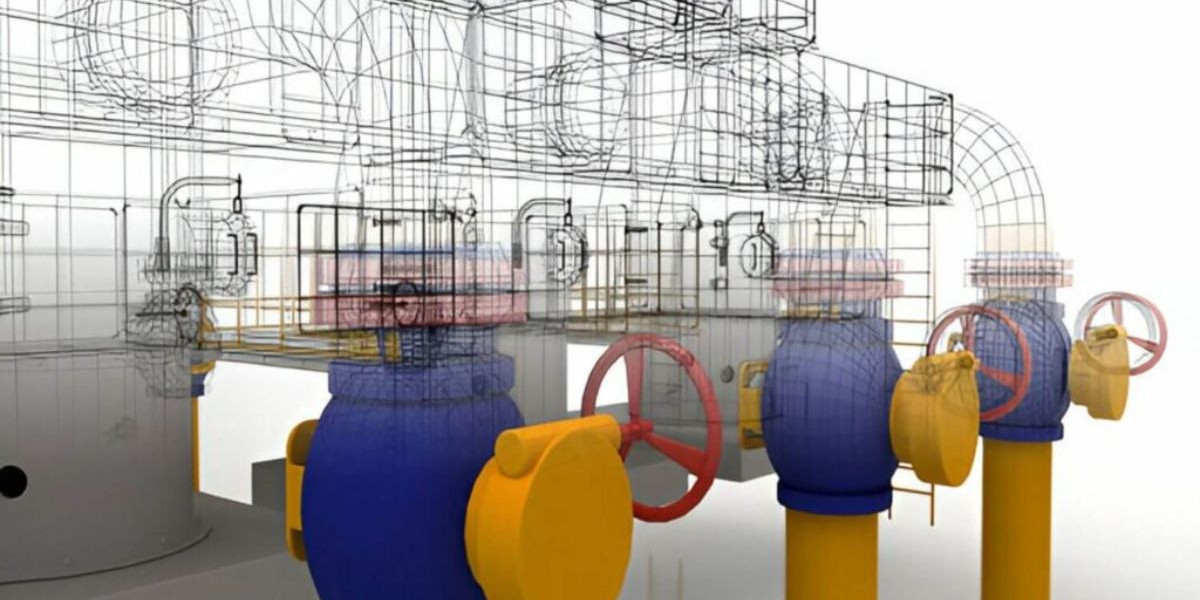
In the fast-paced AEC (Architecture, Engineering, and Construction) industry, the need for precise, intelligent, and collaborative models is more important than ever. This is where Revit Modeling from CAD Services plays a crucial role. Converting 2D CAD drawings into smart 3D Revit models not only enhances visualization but also streamlines design coordination and improves construction outcomes.
What is Revit Modeling from CAD?
Revit Modeling from CAD refers to the process of transforming traditional 2D CAD drawings into detailed 3D BIM (Building Information Modeling) models using Autodesk Revit software. CAD drawings, although accurate, lack the depth, data, and collaborative features that BIM offers. Revit adds parametric components, real-time data integration, and multi-disciplinary coordination to the model.
These services are often used for architectural, structural, MEP, and construction planning projects where precision, collaboration, and future-ready designs are required.
Benefits of Revit Modeling from CAD Services
1. Enhanced Design Accuracy
Converting CAD to Revit eliminates redundant data entry and minimizes human errors. It ensures that dimensions, levels, and components are aligned with the actual construction intent. Revit models are parametric, meaning any change in one view reflects across all related views automatically.
2. Improved Visualization
Revit allows you to visualize how a building will look before construction begins. 3D views, walkthroughs, and renderings provide a better understanding of design intent for stakeholders, clients, and contractors, enabling more informed decision-making.
3. Clash Detection and Coordination
Revit supports multi-disciplinary collaboration (Architecture, Structure, and MEP). Using a coordinated model helps identify and resolve clashes between building systems early in the design process, reducing delays and costly rework on site.
4. Faster Project Delivery
Revit’s automation, templates, and intelligent modeling tools allow for faster updates and project iterations. This boosts productivity and shortens project timelines compared to manual updates in CAD.
5. Data-Driven Models
With CAD to Revit conversion, your models are no longer just geometry. Revit embeds data such as materials, quantities, sizes, and specifications, turning them into a reliable source for cost estimation, scheduling, and facility management.
Applications of Revit Modeling from CAD
Renovation & Retrofit Projects: Old CAD drawings of buildings can be digitized into Revit for modern renovations.
Construction Planning: Builders can extract shop drawings and material schedules from the Revit model.
Facility Management: As-built CAD drawings are converted into Revit models to manage building operations effectively.
MEP Design: 2D MEP layouts are transformed into coordinated 3D models to detect clashes and improve installation accuracy.
Why Outsource Revit Modeling from CAD?
Hiring professionals for CAD to Revit modeling ensures high accuracy, adherence to BIM standards, and faster turnaround times. Outsourcing helps AEC firms focus on core design while experts handle the modeling process using the latest tools and practices.
Professional service providers can convert PDFs, hand sketches, or DWG files into fully detailed Revit models with LOD (Level of Detail) ranging from 100 to 500 depending on the project's needs.
Final Thoughts
Revit Modeling from CAD Services is a game-changer for professionals seeking smarter, more efficient design workflows. It bridges the gap between traditional drafting and modern BIM processes. Whether you’re planning a new construction or retrofitting an old structure, CAD to Revit modeling empowers your project with precision, visualization, and collaboration.
Investing in Revit modeling services today sets the foundation for tomorrow’s smart buildings.
To read more useful blogs, visit Ralphouensanga