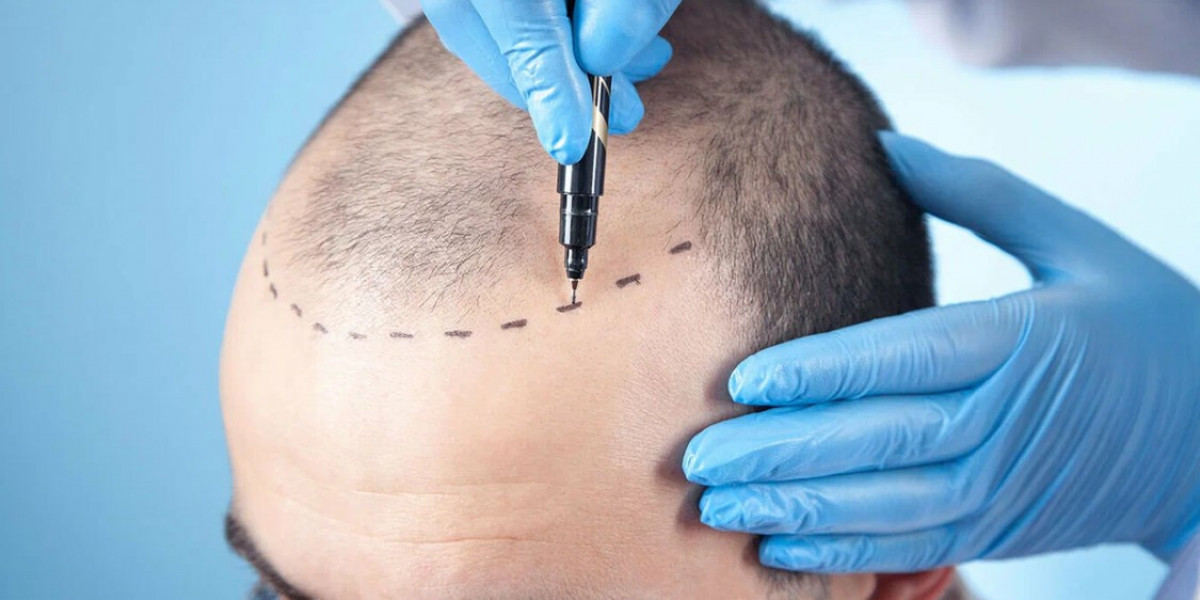

How Age Impacts Hair Transplant Outcomes
Age plays an important role in the success, planning, and long-term results of a hair transplant. While hair restoration can be performed on adults of different age groups, the outcome is not the same for everyone. Factors such as hair loss stability, donor hair quality, future balding risk, and healing capacity all change with age.
Understanding how age impacts hair transplant outcomes helps patients and surgeons make better decisions and avoid unrealistic expectations. A well-timed transplant often leads to more natural, long-lasting results. Hair transplant in Buraydah offers modern solutions for restoring natural hair growth and improving confidence.
Why Age Matters in Hair Transplantation
A hair transplant does not stop future hair loss—it redistributes existing healthy hair follicles from one area of the scalp to another. Because hair loss is progressive in many people, age becomes a key factor in determining:
- Whether hair loss is stable
- How much future thinning may occur
- The long-term appearance of results
- How many grafts should be used
- Whether multiple sessions will be needed
Younger and older patients often require different treatment strategies.
Hair Transplants in Younger Patients (Under 25–30)
Younger individuals often seek hair transplants early due to noticeable hairline recession or thinning. However, this age group requires careful evaluation.
Challenges in Younger Patients
1. Unstable Hair Loss Pattern
Hair loss in younger people is often still progressing. This means:
- Future baldness is unpredictable
- Transplanted hair may look unnatural over time
- Additional surgeries may be required later
2. Risk of Overharvesting Donor Hair
Using too many grafts early can reduce options for future restoration.
3. Unrealistic Expectations
Younger patients may expect full restoration, which is not always possible long-term.
When Hair Transplant May Be Considered for Young Patients
A surgeon may approve a transplant if:
- Hair loss is clearly diagnosed
- Condition is stable or slow progressing
- Medical treatments are being used (e.g., minoxidil or finasteride)
- Patient understands long-term planning
In many cases, doctors recommend delaying surgery until the pattern stabilizes.
Hair Transplants in Patients in Their 30s
This age group is often considered the ideal range for hair transplantation.
Why 30s Are Ideal:
- Hair loss pattern is more predictable
- Donor hair is still strong
- Better long-term planning is possible
- Healing capacity is still high
At this stage, surgeons can design a more accurate and sustainable hairline.
Results in This Age Group:
Patients in their 30s typically achieve:
- Natural-looking hairlines
- Balanced density
- Long-lasting outcomes
- Fewer future complications
This is one of the most commonly treated age groups.
Hair Transplants in Patients in Their 40s
In the 40s, hair loss is usually more established and stable, making planning easier.
Advantages:
- Hair loss pattern is clearly visible
- Donor area is easier to evaluate
- Lower risk of unpredictable future loss
Considerations:
- Donor hair may start to thin slightly
- Healing may be a bit slower compared to younger patients
- More grafts may be needed for coverage
Despite this, results in this age group are often very successful.
Hair Transplants in Patients Over 50
Hair transplants can still be highly effective in older patients, provided they have good donor hair.
Benefits:
- Hair loss is stable and predictable
- Lower risk of future aggressive balding
- More realistic expectations
Challenges:
- Reduced donor density in some cases
- Slower healing process
- Possible medical conditions affecting recovery
Typical Goals:
For older patients, the goal is often:
- Improving facial framing
- Restoring a natural hairline
- Enhancing overall appearance rather than full density
Even moderate improvement can significantly boost confidence.
How Age Affects Donor Hair Quality
Donor hair (usually from the back and sides of the scalp) is critical for transplant success.
Younger Patients:
- Strong donor hair
- High density
- But risk of future thinning in donor area (in aggressive baldness cases)
Older Patients:
- Stable donor pattern
- Possible slight thinning
- Fewer future changes
Donor stability is more important than age alone when determining eligibility.
Age and Hair Loss Progression
Hair loss tends to progress differently across age groups:
- 20s–30s: Rapid or unpredictable progression
- 30s–40s: Slower and more defined pattern
- 40s–50s+: Mostly stabilized loss
This progression affects how surgeons design the hairline and distribute grafts.
Age and Hairline Design Strategy
Surgeons do not design the same hairline for every age group.
Younger Patients:
- Conservative hairline design
- Higher hairline placement
- Preserves grafts for future loss
Older Patients:
- Slightly lower or fuller hairline possible
- Focus on natural aging appearance
- More flexibility in design
The goal is always a natural look appropriate for the patient’s age.
Age and Healing Speed
Healing ability also changes with age.
Younger Patients:
- Faster recovery
- Lower risk of complications
- Stronger tissue regeneration
Older Patients:
- Slightly slower healing
- Higher sensitivity to medications
- Need for more careful aftercare
However, differences are usually minor with proper care.
Age and Long-Term Results
Long-term success depends more on planning than age alone.
Younger Patients:
- May need multiple future procedures
- Higher risk of ongoing hair loss
- Require long-term medication support
Older Patients:
- More stable long-term outcome
- Fewer future changes in hair pattern
- Often need fewer revisions
Is There an Ideal Age for Hair Transplant?
There is no strict “perfect age,” but most specialists prefer:
- Late 20s to 40s as the most suitable range
This is because:
- Hair loss pattern is clearer
- Donor area is stable
- Long-term planning is more accurate
However, each case must be evaluated individually.
Key Factors More Important Than Age
While age matters, surgeons also consider:
- Donor hair density
- Hair loss stability
- Overall health
- Family history of baldness
- Expectations of the patient
Sometimes a 25-year-old with stable hair loss may be a better candidate than a 45-year-old with poor donor hair.
How to Get the Best Results at Any Age
Regardless of age, patients can improve outcomes by:
- Following medical treatment (if recommended)
- Avoiding smoking and alcohol
- Maintaining a healthy diet
- Choosing an experienced surgeon
- Following aftercare instructions strictly
Consistency is key to long-term success.
Final Thoughts
Age significantly influences hair transplant outcomes, but it is not the only deciding factor. Younger patients often face the challenge of ongoing hair loss, while older patients may deal with reduced donor density or slower healing. The most successful results come from proper planning based on age, hair loss pattern, and donor hair quality—not age alone.