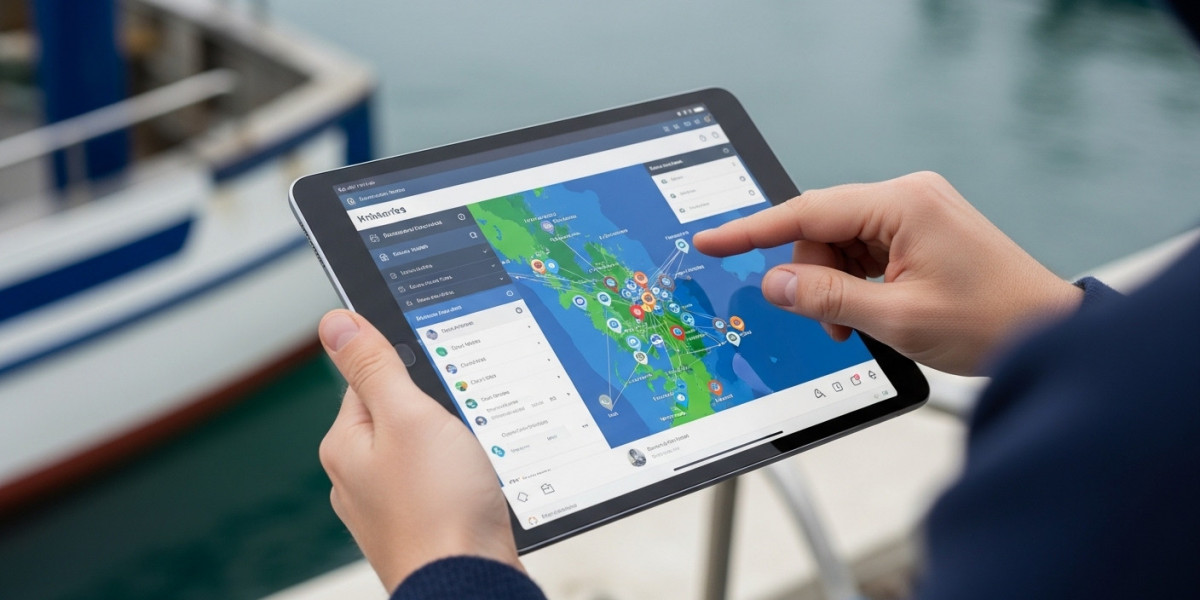

The modern fishing industry is data-driven, fast-paced, and increasingly complex. Managing harvests, compliance, logistics, and inventory requires robust tools that can keep up with the demands of the water and the market. As operations modernize, the decision to invest in advanced fisheries software is no longer a question of "if," but "which kind."
Broadly speaking, you are faced with a fundamental architectural choice: do you house your data on local servers (on-premise), or do you leverage the power of the internet (cloud-based)? While both options aim to streamline your operations, their impact on your day-to-day productivity, IT overhead, and long-term scalability differs significantly. In this guide, we will break down the pros and cons of both models to help you determine which path aligns best with your business goals.
Understanding On-Premise Fisheries Software
On-premise software is the traditional model where you purchase a license to use a program, which is then installed directly on your company's servers and hardware. Your team accesses the software through your internal network.
The Benefits
For some fisheries, the primary draw of on-premise solutions is absolute control. Because the data resides on your physical equipment, you manage the security protocols, the updates, and the maintenance schedule. If you operate in extremely remote locations where internet connectivity is consistently non-existent or unreliable, having a local system that functions entirely offline can be a significant advantage.
The Drawbacks
However, this control comes with a heavy price tag. On-premise solutions require significant upfront capital investment in hardware and licenses. Furthermore, you are responsible for hiring or contracting IT professionals to manage backups, cybersecurity, and software patches. As technology evolves, you may find yourself stuck with outdated software because the cost and complexity of upgrading the system are simply too high.
The Rise of Cloud-Based Fisheries Software
Cloud-based solutions, often referred to as Software-as-a-Service (SaaS), shift the burden of infrastructure away from your business. Instead of hosting data in your office, the software runs on secure, remote servers, and you access it via a web browser or a dedicated app.
The Benefits
The most notable advantage of cloud solutions is accessibility. Whether you are at the harbor, in the office, or traveling between processing facilities, your data is available in real-time. This is essential for modern logistics, where inventory levels and pricing can shift by the hour.
Platforms like Voda IQ are leading this transition, focusing on intuitive interfaces that aggregate critical operational data into actionable insights. Because cloud software is updated centrally by the provider, you are always running the latest version without needing to perform manual maintenance. Security is also often superior in the cloud; top-tier providers invest millions in encryption and redundant data backups—levels of protection that are rarely achievable for small-to-mid-sized businesses on their own.
The Drawbacks
The main hurdle for cloud-based software is the reliance on connectivity. While the industry is becoming more connected, intermittent satellite or cellular coverage can pose challenges. If your workflow relies heavily on the software at sea, you must ensure you have a cloud solution that supports offline sync capabilities, allowing you to log data locally and upload it automatically once a connection is re-established.
Key Considerations for Your Decision
When comparing these two paths, consider these three critical factors:
1. Cost Structure (CapEx vs. OpEx)
On-premise software usually involves a large Capital Expenditure (CapEx) upfront. You pay for the software, the servers, and the setup. Cloud-based software typically operates on an Operational Expenditure (OpEx) model, meaning you pay a predictable monthly or annual subscription fee. For many businesses, the subscription model is easier to budget for and scale.
2. Scalability
As your operation grows, your software needs will change. Scaling an on-premise system often requires purchasing more hardware and spending time on complex server migrations. Cloud solutions are inherently elastic; you can upgrade your plan or add new user seats as your fleet expands without needing to touch a single server.
3. Data Integrity and Security
Ask yourself: Who is better at preventing a data breach? An internal team tasked with a dozen other IT responsibilities, or a specialized cloud provider whose sole business is to ensure the uptime and security of that software? For most modern fisheries, the security offered by modern cloud platforms significantly outweighs the risks.
Making the Leap: Why Modern Fisheries are Moving to the Cloud
The shift toward digitalization in the fishing industry is accelerating, and the benefits of cloud-based technology are becoming impossible to ignore. Real-time monitoring of catches, integrated supply chain tracking, and simplified compliance reporting are much easier to manage when your data isn't trapped in a single physical server rack.
Choosing the right partner is vital. You need a platform that understands the nuance of the industry—the specific challenges of fluctuating inventory, regulatory requirements, and the need for quick, data-driven decisions. Integrating a solution like Voda IQ can help bridge the gap between complex raw data and the high-level visibility needed to run a sustainable and profitable operation.
Conclusion
The debate between cloud-based and on-premise systems ultimately boils down to how much "IT baggage" you want to carry. If your business prioritizes flexibility, real-time insights, and reduced maintenance, cloud-based software is the clear winner. While on-premise solutions offer a level of local control that appeals to specific, highly localized operations, the industry-wide trend is moving decisively toward the cloud.
As you look to modernize your operations, evaluate your current pain points. Are you spending too much time on manual data entry? Is your team struggling to access files while on the move? If so, it might be time to move your operations into the cloud and see how a specialized platform can transform your workflow.
Frequently Asked Questions
Q: Can I use cloud-based fisheries software if I don't have constant internet access?
A: Many modern cloud solutions are designed with "offline-first" capabilities. This means you can continue to input data while disconnected, and the system will automatically sync that information to the cloud as soon as your device reconnects to the internet.
Q: Is cloud-based software more secure than my own local server?
A: Generally, yes. Cloud providers utilize enterprise-grade encryption, multi-factor authentication, and constant security monitoring. Most businesses find it nearly impossible to replicate these security standards on their own internal servers at a similar price point.
Q: How long does it take to switch from an on-premise system to the cloud?
A: The transition time depends on the size of your operation and the volume of historical data you wish to migrate. However, because you aren't installing hardware, the process is usually much faster than traditional software upgrades. A dedicated support team, such as those working with specialized platforms, can typically manage the migration in a matter of weeks.